
How the Center Builds Awareness, Mobilizes Communities, and Fosters Hope
Introduction: The Importance of the VA Suicide Prevention Report
Each year, the Department of Veterans Affairs (VA) releases the National Veteran Suicide Prevention Annual Report. The largest national analysis of veteran suicide rates each year, the VA’s findings provide vital data, insights, and direction for those working to support America’s veterans.
The 2025 report is based on national death certificate data currently available through 2023. It is more than just a collection of numbers; it is a call to action for organizations, families, and communities. At Dixon Center for Military and Veterans Services (the Center), we recognize the profound significance of this report. It both shapes our mission and strengthens our resolve to prevent veteran suicide, advocate for those at risk, and foster hope in every corner of our nation.
Key Findings from the 2025 Report: Understanding the Risks and Trends
The VA’s 2025 report presents a sobering yet essential snapshot of the state of veteran suicide across the United States. Data shows that, despite ongoing prevention efforts, suicide remains a leading cause of death among veterans. The report highlights several critical points:
- Suicide Rates: The suicide rate among veterans continues to exceed that of the non-veteran population, especially among younger veterans and those who have recently transitioned from military service.
- Risk Factors: Contributing factors include mental health conditions such as depression, substance use, chronic pain, social wellbeing, and challenges related to gut-wrenching isolation in civilian life.
- Trends: While some age groups have seen modest declines, others – particularly veterans aged 18-34 – remain at elevated risk. The report also notes disparities based on gender, ethnicity, and geographic location.
- Access to Care: Veterans who are not engaged in VA services or community-based support are disproportionately represented in suicide statistics, revealing possible ongoing barriers to care.
These findings underscore the urgent need for targeted, compassionate, and community-driven responses to veteran death by suicide.
Implications for the Center: Shaping Our Mission and Priorities
For the Center, the 2025 VA report is both a guide and a challenge. It validates our efforts and clarifies the areas on which we must focus our resources. The data tells us that our work is far from finished, and the need for accessible, stigma-free support is greater than ever. We are reminded that every statistic represents a life – a veteran, a family, a story worth saving.
In response, the Center is doubling down on its objective to ensure veterans and their families have the tools, resources, and community connections necessary to thrive. The report informs our strategic priorities, as we work with organizations and communities to expand outreach to at-risk groups, foster early intervention, and advocate for policy and practice changes that remove barriers to care.
Building Public Awareness: Outreach and Education at the Center
One of the most powerful weapons against suicide is awareness. At the Center, we are committed to building capacity at the local level and making information accessible and actionable for veterans, their families, and the wider community. Through workshops, webinars, and social media campaigns, we share facts about suicide risk and prevention, dispel myths, and connect individuals to life-saving resources.
We prioritize education efforts that highlight the warning signs of suicide, the importance of emotional and social wellbeing, and the role of community in supporting veterans. By partnering with organizations like Angel Force USA, engaging local media, and leveraging digital tools, including the Center’s podcast (Service Before Self), we amplify our message: suicide is preventable, and help is available.
Encouraging Community Involvement: Mobilizing Local Support and Engagement
Veteran suicide prevention is not the responsibility of any one organization – it is a community imperative. The Center actively works to engage local leaders, faith-based communities, schools, and businesses in the fight against veteran suicide. We train volunteers, facilitate support groups, and encourage peer-to-peer initiatives that build trust and resilience.
Informed by the Center’s belief that when communities are informed and empowered, they become lifelines for veterans in crisis, our strategies include hosting community forums, providing toolkits for local advocates, and collaborating with trusted grassroots organizations.
Collaboration with Community-Based Services: Partnerships That Save Lives
No single entity can address the complexity of veteran suicide alone. The Center is proud to collaborate with a network of community-based services – mental health providers, crisis hotlines, housing agencies, and employment services – to create a holistic safety net for veterans based on the eight dimensions of wellness. These partnerships allow us to coordinate care, share best practices, and help organizations reach veterans who might otherwise fall through the cracks.
Together, we are building sustainable systems of support that extend beyond emergency intervention. Our joint initiatives promote long-term wellness, reintegration, and hope, as we recognize that real healing occurs most effectively within trusted relationships and strong communities.
Conclusion: A Call to Action and a Message of Hope
The VA’s 2025 National Veteran Suicide Prevention Annual Report is a stark reminder of the important work that remains. At the Center, we answer this call with empathy, determination, and optimism. We invite all of you – organizations, individuals, communities, movements, friends and families, and advocates – to join us in the fight to provide meaningful support to veterans.
If you are a veteran in need, or someone who wants to make a difference, know that you are not alone. Every life saved is a victory for us all, and together, with data to guide us and community to sustain us, we can move closer to a future where every veteran finds hope, help, and belonging.
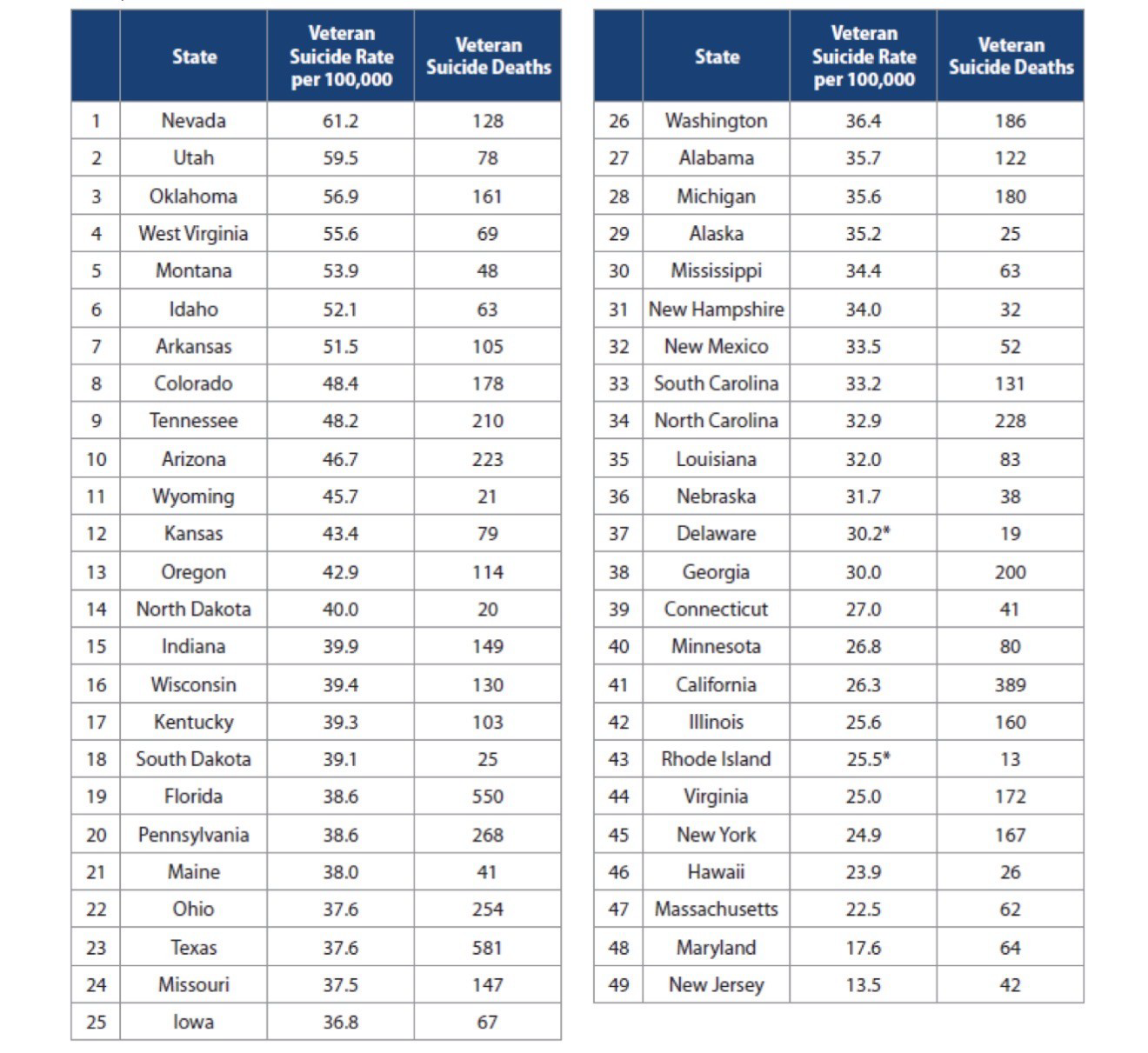
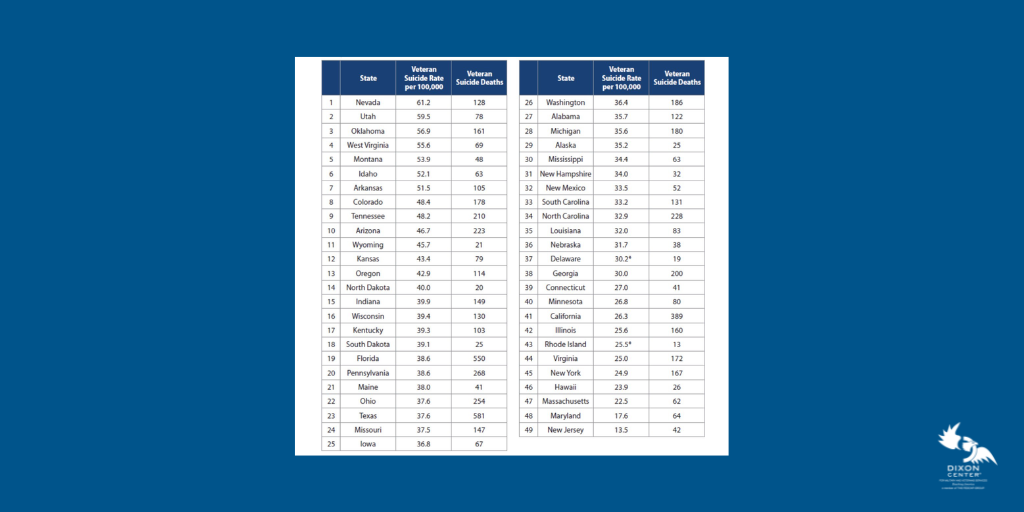
Suicide Rate per 100,000, Veterans, by State, From Highest to Lowest Rate, 2023
https://www.mentalhealth.va.gov/docs/data-sheets/2025/2025_National_Veteran_Suicide_Prevention_Annual_Report_PART_2_FINAL.pdf
