
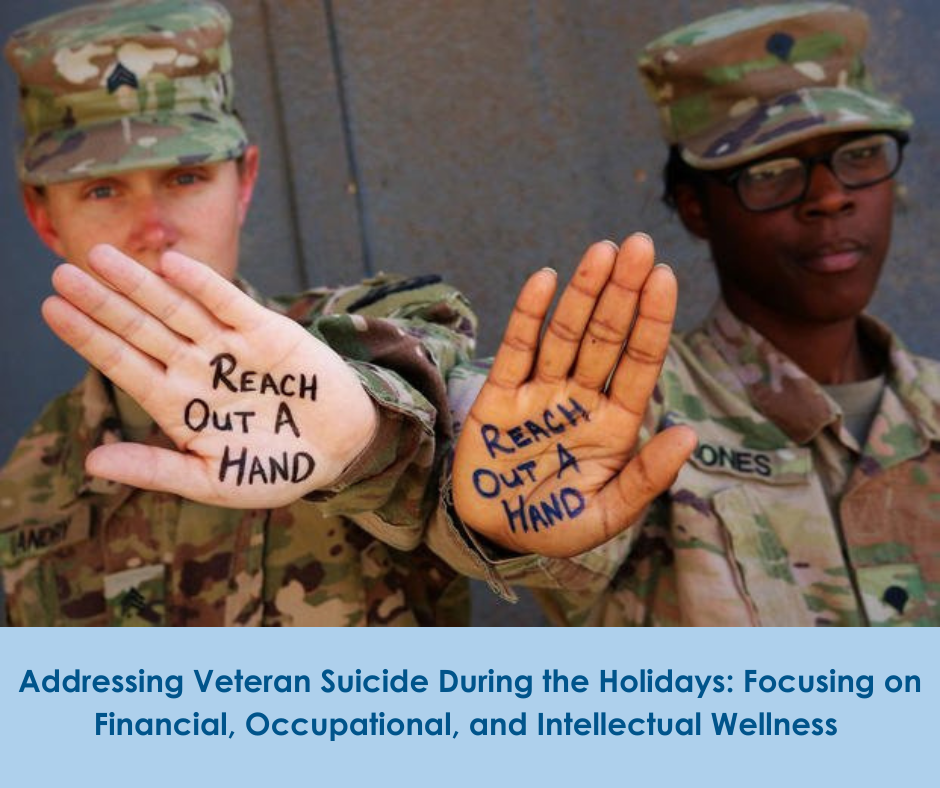
The holiday season, often depicted as a time of joy and togetherness, can present unique challenges for military veterans. For many, the contrast between festive expectations and personal realities can deepen feelings of isolation and distress. Unfortunately, rates of veteran suicide tend to increase during this period, underscoring the urgent need for targeted prevention efforts.
Explaining how seasonal stressors, such as financial pressures and disrupted routines, can exacerbate feelings of isolation among veterans, this blog highlights the increased risk of veteran suicide during the holidays and emphasizes the importance of addressing financial, occupational, and intellectual wellness as prevention pathways. This document suggests targeted solutions like financial counseling, employment support, and opportunities for intellectual engagement, and underscores the value of community and VA resources in supporting veterans’ overall well-being during this particularly challenging time of year.
Veterans face a combination of risk factors during the holidays. Memories of deployment or lost comrades may intensify, while societal pressures to celebrate can magnify feelings of disconnection. Emotional struggles, often invisible to the outside world, are then exacerbated by practical challenges—such as financial uncertainty, difficulty in finding or maintaining meaningful employment, housing instability, and a lack of engagement in stimulating activities—that collectively threaten an individual’s overall well-being.
Financial stress is a significant contributor to mental health challenges among veterans, especially during the holidays when expectations around gift-giving and celebrations can further strain already limited resources. Preventive solutions start with connecting veterans to financial counseling services that offer budgeting strategies, debt management, and assistance in accessing benefits. Community organizations and veteran service groups should amplify outreach for emergency relief funds and holiday-specific assistance programs. Small group workshops on financial literacy can empower veterans to make informed decisions, reducing stress and increasing a sense of control during a time that often feels overwhelming.
Stable, meaningful employment not only offers financial security but also provides structure and a sense of purpose—critical factors in suicide prevention. During the holidays, when routines may be disrupted and temporary layoffs more common, veterans can be especially vulnerable. Outreach programs that connect veterans with seasonal employment opportunities, job fairs, or volunteer roles can help bridge gaps and restore routine. Additionally, workplace mentoring and peer support groups can foster a sense of belonging, help veterans navigate occupational transitions, and remind them they are not alone in their struggles.
Intellectual wellness involves staying mentally stimulated, continuing to learn, and engaging in creative pursuits. The holidays present an opportunity for veterans to participate in workshops, educational classes, or artistic activities—often available through community centers or VA programs. These activities not only provide healthy distractions from negative thoughts but also promote self-esteem and a renewed sense of capability. Encouraging veterans to set personal learning goals and schedule time for intellectual stimulation – whether that means joining a book club or participating in discussion groups related to one’s hobbies – can cultivate curiosity and connection, which are vital to long-term wellness.
Across the nation, a variety of organizations are dedicated to supporting veterans’ financial, occupational, and intellectual well-being. The Department of Veterans Affairs (VA) offers comprehensive counseling and benefit assistance, while nonprofit groups like the Wounded Warrior Project and Team Red, White & Blue provide mentorship, employment connections, and social programs. Many local community centers and veteran service organizations host workshops, job fairs, and educational events tailored specifically to veterans, ensuring that they have access to the resources and networks necessary for personal growth and stability. By leveraging these services, veterans can find guidance, build new skills, and strengthen their sense of community during the holiday season and beyond.
Notably, the work of three organizations is making significant positive impacts on veterans and their families throughout the year:
The National Veteran Small Business Coalition empowers veterans by improving access to federal contracting opportunities, fostering entrepreneurship, and supporting financial growth.
The International Union of Elevator Constructors Veterans Assistance Program offers specialized training, occupational guidance, and job placement services, helping veterans develop valuable skills and find stable careers in the union construction industry.
Black Veterans for Social Justice delivers comprehensive support through career counseling, financial literacy workshops, and educational programs, promoting intellectual growth and economic stability.
Together, these organizations not only address veterans’ financial, occupational, and intellectual well-being but all eight dimensions of wellness—providing resources, mentorship, and advocacy that help veterans and their families build futures filled with opportunity and resilience during the holidays and beyond.
Addressing and ultimately preventing veteran suicide during the holidays requires a comprehensive approach that addresses all eight dimensions of wellness – and especially the intertwined aspects of financial, occupational, and intellectual health. Family, friends, and community organizations play a crucial role in our mission to recognize warning signs and foster environments where veterans feel seen, heard, and supported.
By offering practical resources and encouraging meaningful engagement, we can empower veterans to navigate the holiday season with renewed resilience—and with hope for the year ahead.
