
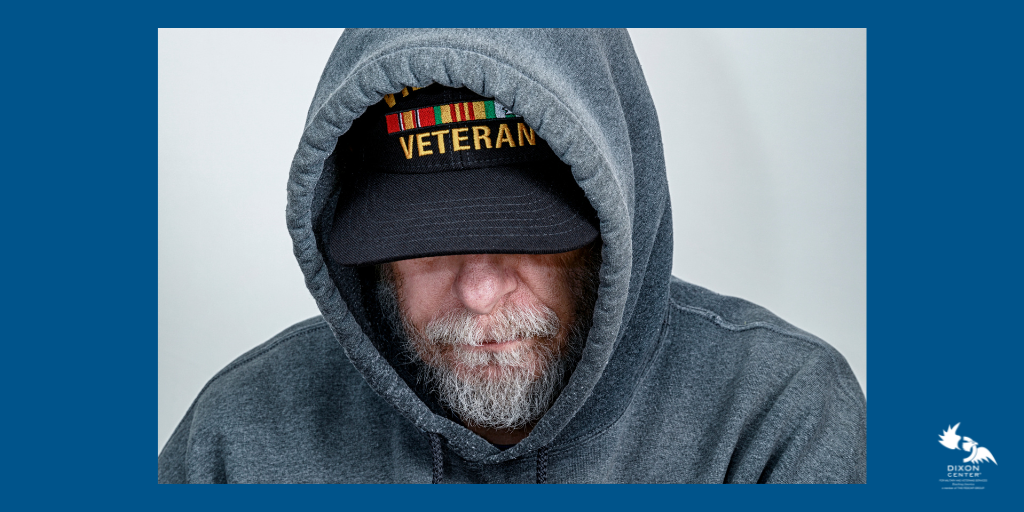
Why Transforming Our Approach to Veteran Well-Being Must Address Loneliness & Isolation
Veteran suicide is not a new epidemic. That said, is it time to reframe our approach to veteran suicide prevention? In this week’s Bugler, Dixon Center for Military and Veterans Services (the Center) highlights the power of social connection, the importance of peer networks, and the value of community-based capacity in combating loneliness and isolation.
We recognize that isolation and disconnection experienced by those who served often shows up quietly and without warning – with one’s sense of belonging and identity having been so strongly influenced by his or her military service that the absence of military life now leaves a significant void.
Building on the conversation started in our last piece (The Power of Data and Community: Responding to the VA’s 2025 National Veteran Suicide Prevention Annual Report), today’s blog further examines the Department of Veterans Affairs (VA) National Veteran Suicide Prevention Annual Report and explores the issue of isolation and disconnection among veterans.
Providing timely insights into the ongoing struggle to reduce suicide rates among veterans, the newly released report presents sobering data and leads us to essential questions, including:
Relying on national mortality statistics and highlighting important trends, risk factors, and areas needing intervention, the report delivers a thorough review of veteran suicide. Although the numbers are concerning, they shed light on patterns that can help inform effective suicide prevention strategies.
Collectively, these findings reveal a complex reality shaped by varied life experiences, health concerns, and societal obstacles.
For many years, the main question guiding veteran suicide prevention efforts has been, “Why are veterans killing themselves?” This perspective has produced valuable research into trauma, mental illness, and the long-term impacts of military service. It has also spurred efforts to improve access to mental healthcare, screen for depression and PTSD, and address clinical symptoms leading up to suicide.
However, this approach has drawbacks. Focusing on individual pathology and crisis points can overlook broader social and environmental contributors to suicide risk. It might reinforce stigma, making veterans feel blamed or judged for their struggles. Importantly, it can neglect systemic issues — such as loneliness, social isolation, and lack of community — that increasingly are seen as significant drivers of suicide.
American Legion Magazine (February 2026) featured Alan Greenblatt’s article, The Invisible Epidemic, which argues that despite living in a hyperconnected world, many people feel more isolated than ever. Growing evidence indicates that rethinking our central question could yield transformative results. Instead of asking “why?”, we might ask, “How can we stop loneliness and isolation among veterans?” This shift moves the focus from individual shortcomings to collective action and from crisis response to proactive relationship-building.
Loneliness and social isolation are now recognized as strong suicide risk factors — not just for veterans, but for everyone. For those who served, leaving behind military camaraderie, structure, and shared purpose can be deeply unsettling. Veterans may become disconnected from family, friends, and community, especially when struggling with physical or mental health problems.
By centering our prevention efforts on loneliness and isolation, we expand the range of possible solutions. We invite communities, organizations, and individuals to take part in fostering connection and belonging.
Research consistently shows a link between loneliness and increased suicide risk, while social support offers protection. Veterans transitioning to civilian life often grapple with losing their identity, difficulty finding meaningful work, and barriers to care — all intensified if a veteran lacks strong social networks.
Studies indicate that isolated veterans are more likely to suffer from depression, substance use disorder, and suicidal thoughts. The loss of military bonds — the so-called “battle buddy” effect — can leave veterans feeling aimless. Older veterans may face additional vulnerability due to retirement, declining health, and loss of peers.
Crucially, loneliness isn’t just an emotion — it’s a measurable risk factor. Tackling it can bring real, positive changes to mental health outcomes.
If we prioritize efforts to prevent loneliness, what might change? Suicide prevention would become a community-wide responsibility, not just for mental health professionals. Faith groups, Veterans Service Organizations, employers, and local governments could all contribute to creating inclusive spaces for veterans.
Programs supporting peer mentoring and group activities show promise. Examples include veteran coffee clubs, volunteer opportunities, and recreational groups, which help rebuild camaraderie lost after service. Technology can also play a role — virtual support groups and online communities offer connection for those far away.
Furthermore, targeted outreach to at-risk veterans who are homeless, unemployed/underemployed, overmedicated or self-medicating, or living alone — helps ensure no one is forgotten. The aim isn’t just to treat mental illness but to provide belonging, purpose, and hope.
The VA and several nonprofits have launched initiatives to reduce suicide. These efforts include crisis hotlines, mental health clinics, outreach, and research into risk factors. The VA’s “Be There” campaign, for instance, urges communities to support veterans through everyday actions.
Despite these advances, big gaps persist. Many veterans aren’t aware of available resources or face hurdles accessing care — like stigma, distance, or transportation issues. Programs targeting loneliness and isolation are newer and less funded than clinical interventions.
Some high-risk groups — such as women veterans, LGBTQ+ veterans, and those with multiple deployments — remain underserved. Closing these gaps requires focused outreach and culturally sensitive programs.
To achieve meaningful progress, the Center is broadening its focus on veteran and military family well-being to include strategies that foster social connection. Here are practical recommendations taken with policymakers, communities, and individuals:
Individuals can also help. Simple gestures — reaching out to a veteran, offering a ride, and simply listening — can powerfully prevent loneliness. Everyone has a role in building a more connected society.
The 2025 National Veteran Suicide Prevention Annual Report reminds us that the issue of veteran suicide is complex and persistent. While understanding why veterans die by suicide matters, it’s equally vital to consider how we can create environments where veterans feel valued, supported, and connected.
Reframing our central question to emphasize preventing loneliness and isolation provides a compassionate and inclusive path forward, rooted in community. Broadening our view and adopting proactive solutions enables us to honor veterans’ service with meaningful action. The journey to reducing suicide rates is lengthy, but together, we can create a future where every veteran finds the connection, support, and hope they deserve.
