
Q1 2026 Outreach & Communications Update
“Create specific content for our audience (partners, donors, business drivers, and networks).” – Stakeholder Engagement: Dixon Center for Military and Veterans Services: Three-Year Business Plan

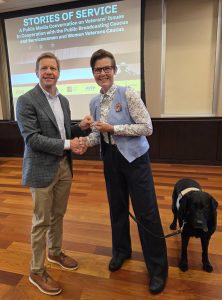
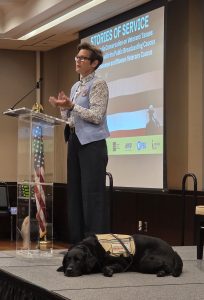
Recently, Dixon Center for Military and Veterans Services attended Stories of Service: A Public Media Conversation on Veterans’ Issues in Washington, D.C.
The event, hosted by PBS and the Corporation for Public Broadcasting, brought together veterans, filmmakers, and congressional leaders to explore how public media is elevating the voices of those who have served.
The program highlighted three powerful initiatives: an excerpt from Make Peace or Die: Honor the Fallen, StoryCorps’ Military Voices Initiative, and South Carolina’s ETV and Public Radio’s After Action—a series that sparks deep conversations on service, memory and healing.
Stacy Pearsall—a combat veteran, Purple Heart recipient, and champion of post-service storytelling—was recognized by Dixon Center for her work creating After Action.
Her leadership in developing the series gives voice to the veteran experience and demonstrates how authentic storytelling can help bridge the divide between military and civilian life.
This event demonstrated Dixon Center’s role as a resource hub of influence, ideas, and actions building capacity:
The stories shared throughout the evening reinforced Dixon Center’s core belief: when we amplify the voices of veterans through trusted platforms, we drive understanding, solutions, and impact at scale.
“Create specific content for our audience (partners, donors, business drivers, and networks).” – Stakeholder Engagement: Dixon Center for Military and Veterans Services: Three-Year Business Plan

“To be sustainable, business development must be continuous.” – Duncan S. Milne, Retired US Marine Corps Colonel, President,Dixon Center for Military and Veterans Services At
“Veterans shouldn’t have to choose between purpose and opportunity. Registered apprenticeships offer both – clear pathways into skilled careers that value the discipline, leadership, and
“Now more than ever, we are reaffirming our unwavering support for those touched by military service by ensuring we have the resources to fulfill our commitments.” – Eileen
