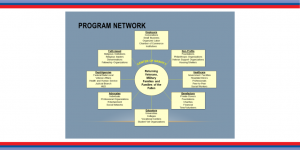
Leveraging and Strengthening Program Networks

Leveraging and Strengthening Program Networks

In 2012, the Office of the Chairman of the Joint Chiefs of Staff Warrior and Family Support published a White Paper, Channeling the “Sea of Goodwill” to Sustain the “Groundswell of Support” Transitioning from Concept to Application written by Captain Chris Manglicmot, Major Ed Kennedy and Colonel David W. Sutherland, now Chairman of Dixon Center for Military and Veterans Services. The concepts discussed in this white paper, in part, created the concepts, ideas and thoughts enabling the goals and objectives of the Center for Military and Veterans Services (Dixon Center).

One of our goals at Dixon Center is to leverage and strengthen program networks. This concept came from pages 3 in the aforementioned white paper.

“American business, education, healthcare, and community leaders can be better informed of the needs and innovative examples that produce solutions for veteran reintegration and transition. Within communities, connecting ideas and tasks that will have a meaningful impact requires the following: Building public awareness Encouraging community involvement and promoting community-based services.”

This idea resulted in the concept of a Community Action Team (CAT), an organization, that pulls in the various community services to discuss and assess the needs of veterans, families, and families of the fallen, and then develops a plan to meet those needs. The CAT identifies gaps and aligns existing services and programs to increase their impact.

At the Center we have taken this from being geographic to functional. In other words we are focusing on networks that have national reach but local impact reinforcing Dixon Center’s five focus areas: workforce development and career placement; housing solutions; wellness research and development; expanding funding streams for veteran entrepreneurs; and, advancing impact via service networks.

Dixon Center relies upon local, regional, state and national contacts to grow solutions from within communities and through organizations—a must for creating sustained impact and for replicating solutions.

Dixon Center maintains a robust network of diverse players, each of whom helps us achieve our mission in a unique way through their networks. Here are some key findings during the past 12 months, despite the pandemic, we are using to leverage networks to create greater impact in 2021:

  • Prioritizing work with networks and building a collaboration model of new solutions, into our strategy for achieving impact
  • Building a diverse network with a wide array of expertise, and we are frequently canvassing our network to tap experts who can fill gaps in knowledge, capacity, or resources.
  • Nurturing both ground-level partnerships, as well as larger strategic partnerships. The deep knowledge for successful solution implementation can be coupled with extended access to resources.
  • Seeking frequent feedback from our networks to gain valuable insight from diverse vantage points. We will be hosting peer shares to drive discussion relating to evolving veteran and military families needs. Then we will act on the results.
  • Networks aren’t a panacea, context matters. Just as Government is not a panacea when it comes to veterans and their families, networks help bring diverse groups to the table. Networks need to adapt and find innovative ways to move beyond their silos and involve stakeholders without overtaxing them. This includes constantly asking, “Who else should be included?”

As we move into 2021, we are looking closer at the systemic impacts of COVID-19 which are widespread when considering veterans and their families. Here are just a few…

  • As evictions rise, the homelessness rate is expected to rise dramatically while shelters are full.
  • Mental health experts are concerned about the long-term impacts from isolation, for example increasing loneliness and death by suicide.
  • As voluntary extensions of service members staying in the military through the duration of the pandemic come to an end there could be a surge of transitioning service members who might be entering a rough economy.

2020 has challenged us all to rethink systems and how every organization can integrate veterans into their organization, direct-services, and programs. Dixon Center will continue to leverage and strengthen program networks. In the coming months we will continue our collaborative innovation. We will double down on this process in which multiple players (within and outside our existing national network of community-based programs) contribute towards creating and developing new products, services, policies, processes, or business solutions leading to veterans and their succeeding where they live.

Stronger Together

Stronger Together

As a Center of Excellence, Dixon Center for Military and Veterans Services provides and coordinates technical assistance/training, resource sharing, and strong leadership to our partners, who, with our ongoing support, operate direct service programs. We work at local and national levels in five focus areas:

Workforce development and career placement: Helping organizations and institutions with programs that recruit, integrate, train, and retain transitioning service members, veterans and military families.

Housing solutions: Collaborating and building partnerships with national partners to expand affordable housing opportunities and services for veterans.

Wellness research and development: Assessing, advising, and assisting organizations as they create, or expand, products and services across the eight dimensions of wellness: emotional, spiritual, intellectual, physical, environmental, occupational, financial, and social.

Expanding funding streams for veteran entrepreneurs: Partnering with financial institutions on reaching veterans with small business funding, planning, and mentorship programs.

Advancing impact via service networks: Facilitating the integration of military and veteran services into existing organizational programs in order to increase impact.

One of Dixon Center’s seven goals is to Strengthen the capacity of our partners who deliver services in focus areas like ours. Our strategy is to partner with business and industry, service providers, and training institutions to develop and operate direct service programs for veterans and their families in our five focus areas. Our goal is not to create new programs. Rather, the goal is to enable the integration of military and veteran services into existing programs to increase impact.

Within the framework of the five focus areas, our approach with each partner is different based upon their specific goals and desired outcomes. A common objective in our work with all of our partners is to increase their visibility and impact by assisting them in being able to rapidly respond to the emerging needs of veterans and their families.

Despite the pandemic, we have helped increase impact in the five focus areas by collaborating with strong partners such as CONSENSYS Health, Hope for The Warriors, Angel Force USA, Burn Pits 360, Soldier On, Opportunity Finance Network, University of Chicago, Single Stop, Teamsters Military Assistance Program, the Utility Workers Military Assistance Program, and the AFL-CIO, to name just a few.

Given all our work with these partners with shared interests and focus areas we have identified these lessons during 2020:

  • During the challenging times of Covid-19, some of the focus areas have moved to a higher priority than others. For example, there are less organizations wanting assistance in providing capital to veteran entrepreneurs. Yet, we have seen an increased demand for assistance by organizations with goals relating to veterans financial, emotional, and social well-being.
  • Dixon Center for Military and Veterans Services must remain agile with a versatile staff. We have a keener sense of what is important. Sacred cows have been killed off. Conferences, collaboratives, logos and egos, have to a large degree faded to the background and organizations are again focused more on impact…not on brand.
  • While the national sense of community is under pressure; local sense of community has never meant more. Neighbors are engaging with ‘their’ at risk populations more than they ever have. There is more awareness of the challenges impacting quality of life for veterans and their families now because most people are feeling the same kinds of pressures: isolation, financial challenges, disconnection from family members, almost random impacts to health and death that civilians never have to contemplate regularly.


We are excited about continuing to create real change. As we look to the future, we will continue to collect data and apply lessons learned. Our collaboration and capacity building with our national network of community-based partners is making an impact for veterans and their families.

For more information about Dixon Center and our outreach and awareness efforts, please contact Duncan Milne, President, dmilne@dixoncenter.org.

Engagement and Awareness

Engagement and Awareness

In our recent eNewsletters and into the next month we are sharing our goals as they relate to our work as a Center of Excellence. We are doing this to build awareness and then, to inspire the reader by demonstrating that Dixon Center for Military and Veterans Services is accountable for something big. One of Dixon Center’s seven goals, and one of two focusing on awareness and engagement is: Steward and build strategic relationships that support partner organizations & advance their fiscal results.
Our goal is not to create new programs. Rather, the goal is to enable the integration of military and veteran services into existing programs to increase impact. As a Center of Excellence, we provide and coordinate technical assistance/training, resource sharing, and strong leadership to our partners, who, with our ongoing support, develop and operate direct service programs.

This includes working at local and national levels in five focus areas: workforce development and career placement; housing solutions; wellness research and development; expanding funding streams for veteran entrepreneurs; and advancing impact via service networks.

Despite the pandemic, our team during Fiscal Year 2020 has been able to maintain meaningful engagements with social, civic, private, and public sector decision-makers and people of influence to expand services by our partner organizations. One of the lessons our team has learned is that to have the greatest impact these engagements must be documented, interactive, and includes a follow-up based on a prescribed timeline. We have also determined that attendance tracking tools; pre and post gauging of activities; online survey tools; and follow up communications (email, phone, in person) to track change/outcomes assist in our accountability, as well as our partners.

Leveraging technology, we have increased outreach and awareness of more than 100 new partnerships in FY 2020. These support organizations, who with our help or encouragement, are including veterans and their families into their existing community-based service programs. This is different than the 300 organizations we referenced last week whose work we are promoting. These are 100 new partnerships who have been encouraged at the community level to include veterans and their families.

Our outreach and awareness are assisting organizations in adjusting their programing to focus on the evolving needs of veterans today, shaping their organizations goals and objectives, and helping them adjust to a new fiscal landscape created by COVID-19. While many organizations have hunkered down and adopted a fortress mentality to ride out the impacts of COVID-19, Dixon Center’s collaborative approach has kept a keen eye on opportunity and emergent needs while leveraging existing community-based programs that have national reach and local impact.

For more information about Dixon Center and our outreach and awareness efforts, please contact Duncan Milne, President, dmilne@dixoncenter.org.

Also, be on the look out! Our newsletter will start going out on Tuesdays instead of Fridays. We hope you continue to look for it on its new day in your inbox.

Enabling the Enablers

Enabling the Enablers

Dixon Center for Military and Veterans Services is enabling the enablers. One of our goals for the past eight years is to leverage & strengthen the Center’s network of partners, supporters, and community-based programs serving veterans and their families.

In 2020, Dixon Center has been working, despite the pandemic, to increase brand awareness, engagement, philanthropy and program impact of our national network of community-based partners. Many of these are service providers, who with our help, are now including veterans and their families in their direct-service programs. Most of this work has been in workforce development and career placement, affordable housing, and financial, emotional & physical well-being.

As a Center of Excellence, we are leveraging our communications and marketing reach to showcase the work of others. Case in point is the production of our podcast series, Service Before Self.

We are using this podcast to build public awareness, encourage community involvement and promote community-based services. These biweekly broadcasts are addressing the evolving needs and solutions improving the quality of life of veterans and their families, the leaders who are creating impact, the innovative ideas, and philanthropic change agents.

Since October 2019, via multiple mediums every week, Dixon Center has promoted and increased the collaboration of over 300 organizations and individuals now serving veterans. Much of our communications and marketing strategy includes webinars, virtual panel discussions, conferences, convenings, collaborative video conferences, blogs, movie screenings and now podcasts. We also utilize social media and host receptions and award ceremonies. These partner organizations come from all sectors of society including business and industry, direct service wellness providers, training institutions, philanthropists, faith based organizations, and nonprofits that we have helped develop and operate direct service programs for veterans and their families.

We have more to do. Yet the fact is that we continue to validate our founding premise, we are much stronger together than apart. Dixon Center’s approach to breaking down barriers and making connections works. Since 2012, our collaboration and capacity building has impacted nearly 1.7 million individuals and organizations at the end of 2019. As we prepare to end the 2020 Fiscal Year watch for our operating highlights which are part of The Fedcap Group’s comprehensive financial statement package. Based on audited financial statements ending September 30, 2019, 86% of Fedcap’s total expenditures went directly toward programming.

Dixon Center for Military and Veterans Services is a subsidiary of The Fedcap Group, a global network of top-tier nonprofit agencies. The Fedcap Group serves as the fiscal agent for Dixon Center and as a 501(c)3 nonprofit organization. The Fedcap Group is committed to promoting transparency and integrity in our fiscal practice and we are proud of its GuideStar recognition with the 2019 Silver Seal of Transparency.

For more information about The Fedcap Group or Dixon Center, please contact Duncan Milne, President, dmilne@dixoncenter.org.

Achieving Dixon Center’s Goals

Achieving Dixon Center’s Goals

One of Dixon Center’s goals is developing, designing, and delivering relevant, objective, and trusted expertise to assist organizations so they can find and focus on veterans and their families in employment, education, wellness, and housing. While the pandemic has presented challenges in achieving this goal, it has also created opportunities for Dixon Center and our partners to interact with the individuals and communities we serve in unique and innovative ways.
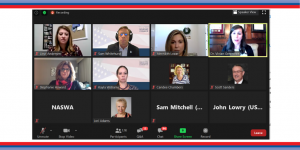
For example, recently Dixon Center presented at the National Association of State Workforce Agencies Annual Conference to raise awareness about the challenges that military caregivers face. We were able to connect to over 1,100 state workforce professionals during this virtual conference; this would not have been possible at a “in-person” conference.

In this calendar year alone, a sample of some of the organizations we have worked with in the areas of employment, education, wellness, and housing: Teamsters Military Assistance Program, AFL-CIO Union Veterans Council, ConsenSys Health, Hope For The Warriors, Yellow Ribbon Network, University of Chicago, American Legion, Clear2Connect Coalition, Utility Workers Military Assistance Program, Toxic Exposures in the American Military (TEAM) Coalition, National Association of State Workforce Agencies, Easter Seals Greater Houston, Burn Pits 360, Single Stop, University of Pittsburgh Center for Military Medical Research, ABF Freight, U.S. Army, and MVLE.

Through innovation, agility, courage, and concerted effort, these organizations have been able to pivot their programs to address the evolving needs of our veterans and families and also ensure those needs don’t begin to devolve due to the pandemic.

We’ve learned over the course of the pandemic, that much of the work we have had success with over the last decade is once again is coming to the forefront. Under/unemployment, homelessness, wellness, and other challenges loom on the horizon. But we have an opportunity to have a ‘do-over’ on the way we approached those challenges previously. For example, instead of just cranking out large numbers of jobs, we can focus on careers, and careers that are resilient regardless of external challenges.

For more information about The Fedcap Group or Dixon Center, please contact Duncan Milne, President, dmilne@dixoncenter.org.

Listen to Our First Podcast

Listen to Our First Podcast

The first episode of the new podcast from Dixon Center for Military & Veterans Services has launched!

Service Before Self tackles the evolving needs of veterans and their families, based on the idea that veterans can succeed in the community where they live.

In the first episode, host Sam Whitehurst is joined by Rick Passarelli, the director of veteran affairs and workforce development at Utility Workers Union of America (UWUA) and the chair for the workforce development subcommittee for the AFL-CIO Union Veterans Council.

Rick is the architect behind one of the most impactful workforce development programs for veterans in the country, the Utility Workers Military Assistance Program (UMAP).

Episode #1, titled “Rick Passarelli: Forging New Pathways to Careers with Purpose for Veterans and Their Families,” covers Rick’s distinguished career of service to his country as well as what has made UMAP such a successful program for veterans.

We invite you to download the podcast on your favorite distributor – the two most popular ones are below.

Episode 1 on Apple Podcasts
Episode 1 on Spotify

Let us know how we’re doing by leaving us a review on Apple Podcasts, Spotify or one of the other distributors where you found us. Then stay tuned for the next episode where we will recognize some of you in the show notes and on air.

For more information about the podcast, please contact its host and producer Sam Whitehurst, swhitehurst@dixoncenter.org.

Subscribe To/Follow Our New Podcast

Subscribe To/Follow Our New Podcast

Whether you are an avid podcast fan or new to the medium, we invite you to give the new podcast from Dixon Center for Military & Veterans Services a listen.

Our biweekly podcast spotlights an organization or program that is having a meaningful and lasting impact on ensuring that veterans and their families succeed in the communities where they live. Each episode will highlight the evolving needs of veterans and their families as well as best practices and lessons learned from successful programs.

The podcast’s name, Service Before Self, recognizes the commitment demonstrated by veterans and their families during their military service as well as their potential as they reintegrate back into their communities when military service ends.

We invite you to listen to our two-minute trailer and subscribe to the podcast. Our first episode will post soon, so you’ll want to subscribe to or follow us to ensure you are one of the first to be alerted. We welcome your feedback and will be reading your reviews and comments on Apple Podcasts, Spotify, Google Podcasts or one of the many other distributors.


Trailer on Apple Podcasts

Trailer on Spotify

Trailer on Google Podcasts 


For more information about the podcast, please contact its host and producer Sam Whitehurst, swhitehurst@dixoncenter.org.

Demonstrating Success

Demonstrating Success

This week’s profile is Grant Collins, who wears many hats as part of the Fedcap organization. He is not only senior vice president, Workforce Development, of The Fedcap Group but also president of Fedcap Inc., which consists of Fedcap UK and Fedcap Canada.
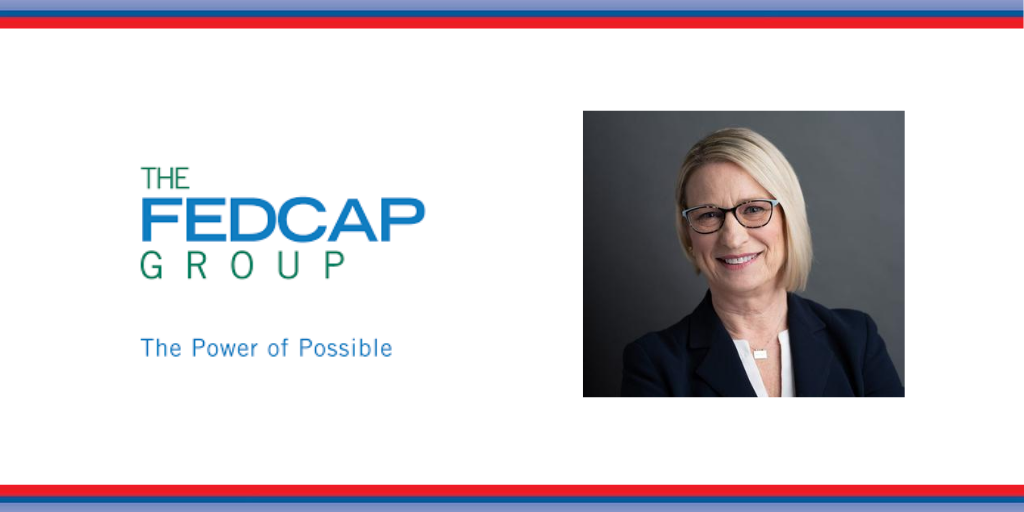
Grant views the work of Dixon Center for Military and Veterans Services from the unique position of growing up in a military family. “It’s a hard life for families and certainly on those who return from service overseas,” he says. From his perspective, it’s important to recognize the struggles of military families. He sees a need to enact programs and services in the community that can serve as a resource to enable veterans and their families to succeed where they live.

Grant firmly considers Dixon Center to be relevant and important given the volume of work needed to enable the successful re-integration of veterans and military families into communities. He sees as a challenge the myriad veterans service organizations in the United States, pointing out that even he, a member of a military family, has trouble distinguishing one from another.

Dixon Center is different because he sees the organization as preparing entire communities for veterans’ returns, working with existing organizations and companies to upgrade older veterans’ skills and get the newly transitioned veterans into living wage professions. Grant can point a direct line from the ideas espoused by Dixon Center to the non-profit rallying communities to ensure the right resources are available to its constituents.

“I see the reports every quarter, and Dixon Center is always among the top three Fedcap Group programs that produce the most job placements,” he states. “I know tangibly that it is working.”

For more information about The Fedcap Group or Dixon Center, please contact Duncan Milne, President, dmilne@dixoncenter.org.

Why Connection Matters

Why Connection Matters

This week’s profile is Carol Khoury, chief financial officer of The Fedcap Group and a notable advocate of Dixon Center for Military and Veterans Services.

Carol sees her role as ensuring that the work and the plans of Dixon Center are supported by The Fedcap Group. She views herself as “the support that frees the ‘program people’ up so that they can do their work and concentrate 100 percent on social services.”

Carol began her professional career with the Peace Corps, and found that the social service environment was a good fit. While she has not previously worked with veterans or military families, she believes it suits The Fedcap Group. “The general mission of The Fedcap Group is removing barriers to independence and aiding people in their desires to be productive citizens of society,” she says. “The veterans’ space is a major area where people are experiencing these barriers.”

In her eyes, Dixon Center’s work runs the spectrum from directing a veteran to assistance in the community to implementing systems-level change. It is all to improve the way veterans are viewed and supported in the communities where they live.

Carol appreciates the leadership’s personal connection with those who are involved with the mission, citing the penchant of Dixon Center’s chairman, Colonel David Sutherland, US Army (Ret.) for writing handwritten notes. “In this day and age, knowing all that he is doing to advance Dixon Center’s progress, he stops to make connections and do things in a very personal way.”

Carol concludes, “I’m glad that my first experience working with veterans has been with Dixon Center.”

For more information about The Fedcap Group or Dixon Center, please contact Duncan Milne, President, dmilne@dixoncenter.org

An Example of How We Work

An Example of How We Work

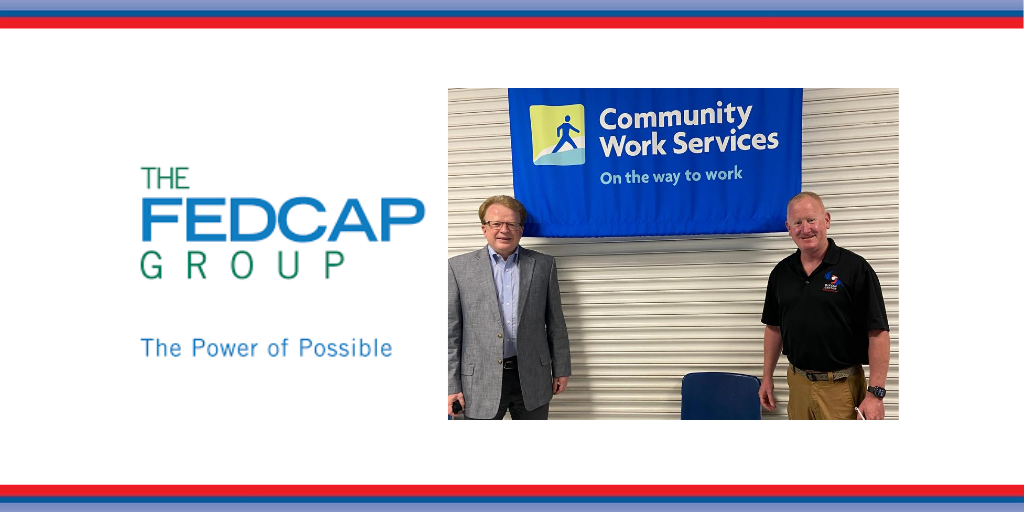
This week’s profile is Craig Stenning, executive director of Community Work Services. Craig is an innovative leader within The Fedcap Group and a strong partner of Dixon Center for Military and Veterans Services.

“I wanted to develop a program at Easterseals Rhode Island that would provide emergency assistance to veterans, and that’s how I first became aware of Dixon Center. They assisted us in getting initial funding and, more importantly, in establishing the guidelines that we would use to evaluate individual requests. It was a successful program and an excellent collaboration.

“Five years later when I became executive director of Community Work Services, our organizations began working more closely as we intensified our veterans focus. Community Work Services offers job readiness, job placement, job training, and employment support for individuals with barriers, a portion of whom are veterans.

“We are also incorporating veterans as part of our Double Impact Initiative in which we provide meals for Boston-area residents experiencing food insecurity. In the program’s first two months, we prepared, packaged and delivered more than 30,000 meals, working alongside several veterans organizations.

“Community Work Services is extremely well-versed in providing job readiness, job training and job placement services. Dixon Center is extremely skilled at linking up with community organizations that primarily service veterans. They have also helped us explore funding options to support our programs serving veterans.

“Moving forward, we plan to have veterans be a dedicated, permanent part of our work. It’s not about pulling veterans out separately; it’s about being able to expand our outreach and incorporate them into our existing programs. Dixon Center has been the glue in bridging our organization with others to accomplish that.”

For more information about The Fedcap Group or Dixon Center, please contact Duncan Milne, President, dmilne@dixoncenter.org.