Unseen Wounds

Unseen Wounds

The Philadelphia Inquirer – OPINION 
Unseen Wounds 
Leaving the war is half the battle. Leaving the war behind is the other. How everyday efforts can help veterans be civilians again.

Oringinally Published Feb. 10, 2013
LINK: https://www.inquirer.com/philly/opinion/currents/20130210_Unseen_wounds.html

David Sutherland is a retired U.S. Army colonel and director of the Center for Military and Veterans Community Services (Dixon Center)
Paula J. Caplan is a Harvard University psychologist and author of “When Johnny and Jane Come Marching Home: How All of Us Can Help Veterans”

There’s no mystery, but people talk as though there is. Some leaders in the Department of Veterans Affairs, as well as some psychotherapists and other citizens, express puzzlement about why, in the last 11 years, the rates of suicides, family breakdown, substance abuse, and homelessness among war veterans have steadily risen.

VA Secretary Eric K. Shinseki spoke recently about suicide without offering explanations beyond “some increased level of stress,” scant improvement over a Defense Department press release titled “Uncertainty About Military Suicides Frustrates Services.”

Is there really a mystery? Do we really not know why 22 veterans take their own lives every day – 70 percent among vets over age 50? Or why veterans are 50 percent more likely to end up without a home than other Americans? Why the divorce rate among military couples has increased 42 percent during the wars in Afghanistan and Iraq? How it is that nearly two million veterans from all wars are substance abusers?

Based on our years of on-the-ground and clinical experiences, respectively, working with veterans, we believe there is no mystery. Four primary factors cause the emotional devastation and moral anguish that plague so many who have been to war.

First, war is vile. Imagine holding in your arms a 5-year-old girl shot in the face by an insurgent because her father served in the Iraqi police force. Or driving in a convoy, with children running playfully beside you, when a terrorist drives his pickup into the children, killing them all. The horror and barbarism are chilling: comrades die, innocents are maimed, local “friendly” forces betray you.

Contributing to veterans’ suffering is the soul-crushing isolation most experience when they return home. Friends and family rarely know what these men and women have experienced, and many veterans hesitate to talk openly for fear of upsetting loved ones, facing harsh judgment, or simply not being understood. For many, the silence and isolation continue for decades.

Increasing the isolation is the fact that people traumatized by war are often mislabeled as mentally ill. The “disorder” labels most often used – post-traumatic stress, major depressive, generalized anxiety, bipolar – further distance veterans from their communities. Civilians assume that they are unqualified to help, believing that only therapists have the needed tools. Nothing we propose precludes veterans from seeking help from a therapist. Anyone who is suffering deserves attention and care, and for some, that might include traditional approaches used by therapists. However, not all suffering constitutes a mental disorder, and our nation’s knee-jerk reaction to call all war trauma “mental illness” ends up hurting veterans.

Finally, psychotropic drugs often intensify the veterans’ suffering and isolation. Once labeled with a mental illness, veterans are routinely prescribed cocktails of psychiatric drugs that alter in troubling ways their emotions and cognition. Tragically, the kinds of harm the drugs can cause include precisely those that are increasing among service members and veterans: suicide, family breakdown, substance abuse, and homelessness. Many senior Defense officials have voiced their concern about the dangerous effects of these drugs.

There are many effective and nonpathologizing solutions to the epidemic problems destroying our war veterans. All of us – including the military, the VA, and mental-health professionals – must stop automatically labeling war veterans “mentally ill.” Being shaken to the core by war is a deeply human reaction. Calling it mental disorder alienates veterans from themselves and their communities and causes moral anguish. It blinds civilians to veterans’ pain and cuts civilians off from their common humanity with those who have gone to war.

There are low-risk ways that community leaders or any citizen can help veterans heal, primarily helping them create or connect, which in turn will help their communities. Unlike drugs, these do not have dangerous side effects, and they could not differ more from the isolation intensified by labeling and drugging. These options include involving veterans in mentoring, volunteering, meditation, promoting the arts, sports and recreation, nonprofit leadership, and political action, and providing them service animals for connection and comfort. The recent “A Better Welcome Home” conference at Harvard Kennedy School’s Ash Center for Democratic Governance and Innovation featured several examples. (Visit http://bit.ly/OToAwc for more information.)

Even something as simple as listening can make a difference. Veterans taking part in the Welcome Johnny and Jane Home project reported that having the chance to tell their stories was helpful and healing, according to a study conducted at the Harvard Kennedy School.

And citizens can speak up. Our military and political leadership need to hear that Americans care about our veterans and are willing to do their part to help. As our military men and women continue to return, scarred and battered, American communities must not isolate veterans. Avoid the misplaced labels of mental illness. Listen. Help veterans heal on their own terms and at their own speed. With the right community support, with deep connections, our veterans will truly come home.
Partnerships Creating Work with Purpose

Partnerships Creating Work with Purpose

People from different walks of life can achieve opportunity, to change generational wealth for their families, in a matter of months.”

– Dr. Willie L. Todd, Jr., President,
Denmark Technical College

Last week, Dixon Center for Military and Veterans Services visited Denmark Technical College with one of our partners, Fusion Cyber. It was an opportunity to see first-hand the impact of the Fusion Cyber Bridge Program, a program that is providing critical career pathways for underserved communities, including veterans, in rural South Carolina.

Fusion Cyber’s Cyber Bridge Program connects veterans and underrepresented communities to Minority Serving Institutions/Historically Black Colleges and Universities to facilitate education and training in cyber fields and Security Operation Centers to spur long-term community development.

Dixon Center is assisting them in expanding and rapidly deploying this model into communities across the U.S. by connecting these programs with supportive services, reducing barriers to entry into the cybersecurity sector for our veterans and their families.

This is an exciting opportunity to transform the lives of veterans and their families, especially in rural communities across the country. Stay tuned for updates as we expand this program into other communities in Illinois and Pennsylvania.

More Posts

Q1 2026 Outreach & Communications Update

“Create specific content for our audience (partners, donors, business drivers, and networks).” – Stakeholder Engagement: Dixon Center for Military and Veterans Services: Three-Year Business Plan

Donate for a Duffle Bag

Donate for a Duffle Bag

Donate $250 or more and receive our popular Dixon Center for Military and Veterans Duffle Bag. Limited supply but there is still time if you act quickly! Your generous donation will assist us in creating positive outcomes for Veterans and Military Families across the Nation.  Visit our donate page, or scan the QR code to give. You can also contact Vanessa Stergios at vstergious@dixoncenter.org for more information. 

More Posts

Q1 2026 Outreach & Communications Update

“Create specific content for our audience (partners, donors, business drivers, and networks).” – Stakeholder Engagement: Dixon Center for Military and Veterans Services: Three-Year Business Plan

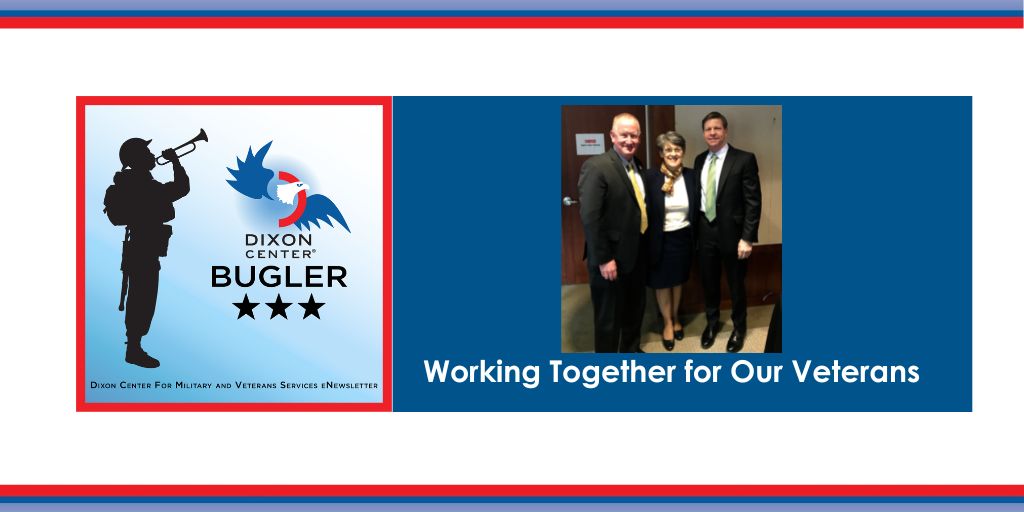
Working Together for Our Veterans

Working Together for Our Veterans

At Dixon Center for Military and Veterans Services we work with thousands of organizations and individuals nationwide who assist with our noble purpose of making the lives of our veterans and their families better.
 
One of the most impactful organizations we work with is our very own, The Fedcap Group, and its array of top-tier nonprofit agencies dedicated to advancing the economic well-being of people with barriers. Dixon Center works every day with the companies of The Fedcap Group to help them integrate veterans and their families into their vast offering of capabilities focused on knocking down economic barriers.

Just recently we focused efforts on helping Fedcap Serving Maine stand up their new organization, Veterans Forward, an organization designed to provide critical assistance to create a sustainable future for Maine’s veterans, service members and their families.
 
Dixon Center continues to work with Community Work Services to assist in the integration of veterans of the Boston area into their programs so that veterans may gain a level of economic security and opportunity.
 
These are just a few examples of how Dixon Center for Military and Veterans Services works across The Fedcap Group to ensure that veterans and their families can succeed in the communities where they live.  If you would like to learn more about our work within The Fedcap Group or with other organizations across the nation, contact our President, Retired Marine Colonel, Duncan S. Milne at dmilne@dixoncenter.org.

More Posts

Q1 2026 Outreach & Communications Update

“Create specific content for our audience (partners, donors, business drivers, and networks).” – Stakeholder Engagement: Dixon Center for Military and Veterans Services: Three-Year Business Plan

Save the Date: Annual Holiday Reception

Save the Date: Annual Holiday Reception

Save the DateDixon Center for Military and Veterans ServicesAnnual Holiday ReceptionTuesday Evening, December 13, 2022 from 6:00pm – 8:00pm ESTWashington, D.C.

Please Save the Date of our Annual Holiday Reception and Awards Ceremony.

About this Event

We hope that you will save the date for our annual holiday reception and award ceremony. We use this time every year to thank our friends, families, supporters, and donors. Every year we recognize special individuals and organizations with our four awards:

The Eugene and Ruth Freedman Leadership Award

The Herbert and Carolyn Metzger Service Award

The Michael “Mick” Yauger Point Man Award

The Lou Lowenkron Commitment to Veterans Excellence Award

Please Save the Date and we look forward to another successful event. Watch for more information and announcements.

Dixon Center for Military and Veterans Servicesc/o The Fedcap Group633 3rd Avenue, 6th Floor, New York, NY 10017www.dixoncenter.org

More Posts

Q1 2026 Outreach & Communications Update

“Create specific content for our audience (partners, donors, business drivers, and networks).” – Stakeholder Engagement: Dixon Center for Military and Veterans Services: Three-Year Business Plan

Well Done Is Better Than Well Said

Well Done Is Better Than Well Said

This country has a long history of men and women making sacrifices for our freedom.
As we celebrate our freedom and our county’s independence this holiday with our families, we especially appreciate how actions across the country are enhancing the independence of those touched by military service. 

Independence is not driven by words but by actions. 

It is in our DNA as a country, an attitude across the nation, to want to assist those individuals who have served in uniform and their families. In the past few months we’ve seen this Sea of Goodwill in action. Soldier On kicking off new affordable housing for veterans in Massachusettes. Easterseals Serving Greater Cincinatti celebrating their service to 4,000 veterans and expanding direct services and facilities. The National Coalition for Homeless Veterans expanding their collaborative training, and Bob Woodruff Foundation Got Your 6 training and education.

So this July 4th, please go beyond what you might usually do and get to know our veterans and their families through action. A little creativity and an inquisitive mind will turn up lots of opportunities to put your talents to good use.

For example, if you don’t support a food bank, would you consider doing so? It would mean a lot for veterans, spouses and children facing food insecurities. 

Your generous, tax-deductible, memorial or honorary tribute donation to Dixon Center for Military and Veterans Services will make a positive difference in the lives of veterans and their families.  Don’t just make an investment. Have an impact.

In New England, our partners, Soldier On are building more affordable housing and outreach to veterans at risk of homelessness. Their outreach coordinators travel to the client, responding to needs while being unencumbered by office hours or locations. Donate so they can have the gas to travel.

We will pledge this to you. If you extend your thanks by taking some action, you will become an honorary member of a special network of people – then we can thank you for your service.

The Key to Supporting Veterans and their Families Where They Live . . . Collaboration!

The Key to Supporting Veterans and their Families Where They Live . . . Collaboration!

As a Soldier, you are always focused on security, always prepared for threats, no matter the direction. You are taught to be especially vigilant against threats from the direction where you expect them the least, from behind you. In the Army, we refer to this as ensuring that someone is always watching your “six,” or making sure someone has your “six” covered. That approach is found in all facets of military service—30 years as a Soldier, I always knew, that no matter the circumstances, I could always count on my fellow Soldiers to have my back, to cover my six.

That approach describes the Got Your 6 (GY6) Network, an initiative sponsored by the Bob Woodruff Foundation. GY6 is a network of communities, working together to impact the lives of veterans and their families in the communities where they live.  The GY6 network steers tools and resources to their national network of local partners, increasing their capacity and creating  a collaborative community that shares solutions to the evolving needs of veterans and their families—always ensuring that someone is covering their “six.”  

Recently, GY6 hosted the Got Your 6 Summit in New York City, bringing together community-based organizations that provide services to veterans and their families in New York. It was a day of collaboration as individuals and organizations shared what was working, what wasn’t, and developed innovative ideas to increase the well-being of veterans and their families.
Creating an environment where veteran serving non-profits, governmental organizations, philanthropists, academia and research organizations, and the private sector can come together and work toward a common objective is what made the GY6 Summit so successful.

This approach of increasing the capacity of organizations that serve veterans through collaboration, training, and resources also defines how Dixon Center for Military and Veterans Services makes the lives of veterans and their families better across our three pillars of work, Work with Purpose, Heal with Honor, and Live with Hope.
Dixon Center looks forward to continuing to work with the Bob Woodruff Foundation, the Got Your 6 Network, and our other partners who are increasing the well-being of veterans and their families across the country

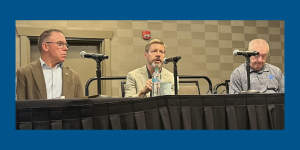
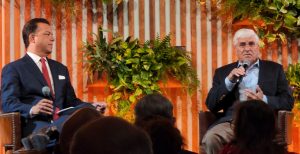
Photo One: John Avlon, CNN Sr. Political Analyst and General George Casey, 36th Army Chief of Staff at the Got Your 6 Summit

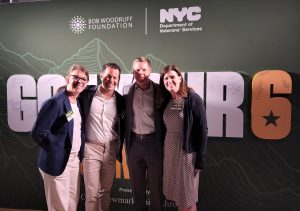
Photo Two: Meg Harrell, Bob Woodruff Foundation; Rajeev Ramchand, RAND; Sam Whitehurst, Dixon Center; and Carrie Farmer, RAND

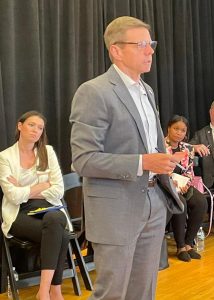
Photo Three: Colonel (R) Sam Whitehurst, Dixon Center, at the Got Your 6 Summit

Why Connection Matters

Why Connection Matters

This week’s profile is Carol Khoury, chief financial officer of The Fedcap Group and a notable advocate of Dixon Center for Military and Veterans Services.

Carol sees her role as ensuring that the work and the plans of Dixon Center are supported by The Fedcap Group. She views herself as “the support that frees the ‘program people’ up so that they can do their work and concentrate 100 percent on social services.”

Carol began her professional career with the Peace Corps, and found that the social service environment was a good fit. While she has not previously worked with veterans or military families, she believes it suits The Fedcap Group. “The general mission of The Fedcap Group is removing barriers to independence and aiding people in their desires to be productive citizens of society,” she says. “The veterans’ space is a major area where people are experiencing these barriers.”

In her eyes, Dixon Center’s work runs the spectrum from directing a veteran to assistance in the community to implementing systems-level change. It is all to improve the way veterans are viewed and supported in the communities where they live.

Carol appreciates the leadership’s personal connection with those who are involved with the mission, citing the penchant of Dixon Center’s chairman, Colonel David Sutherland, US Army (Ret.) for writing handwritten notes. “In this day and age, knowing all that he is doing to advance Dixon Center’s progress, he stops to make connections and do things in a very personal way.”

Carol concludes, “I’m glad that my first experience working with veterans has been with Dixon Center.”

For more information about The Fedcap Group or Dixon Center, please contact Duncan Milne, President, dmilne@dixoncenter.org